Conçus pour une coupe précise : outils professionnels pour le métal, la tôle et bien plus encore
Précis. Robuste. Conçu pour les professionnels qui travaillent quotidiennement avec précision.
Qu'il s'agisse de tôle, d'aluminium ou de matériaux fins, chaque coupe compte dans la technique de découpe. BESSEY vous propose des solutions intelligentes : des cisailles à tôle robustes et des cisailles combinées polyvalentes aux modèles à levier pour une puissance maximale, en passant par des couteaux de coupe précis et des outils multifonctions pratiques. Nos outils sont conçus pour les conditions difficiles des ateliers et des chantiers et rendent votre travail plus facile, plus rapide et plus précis.
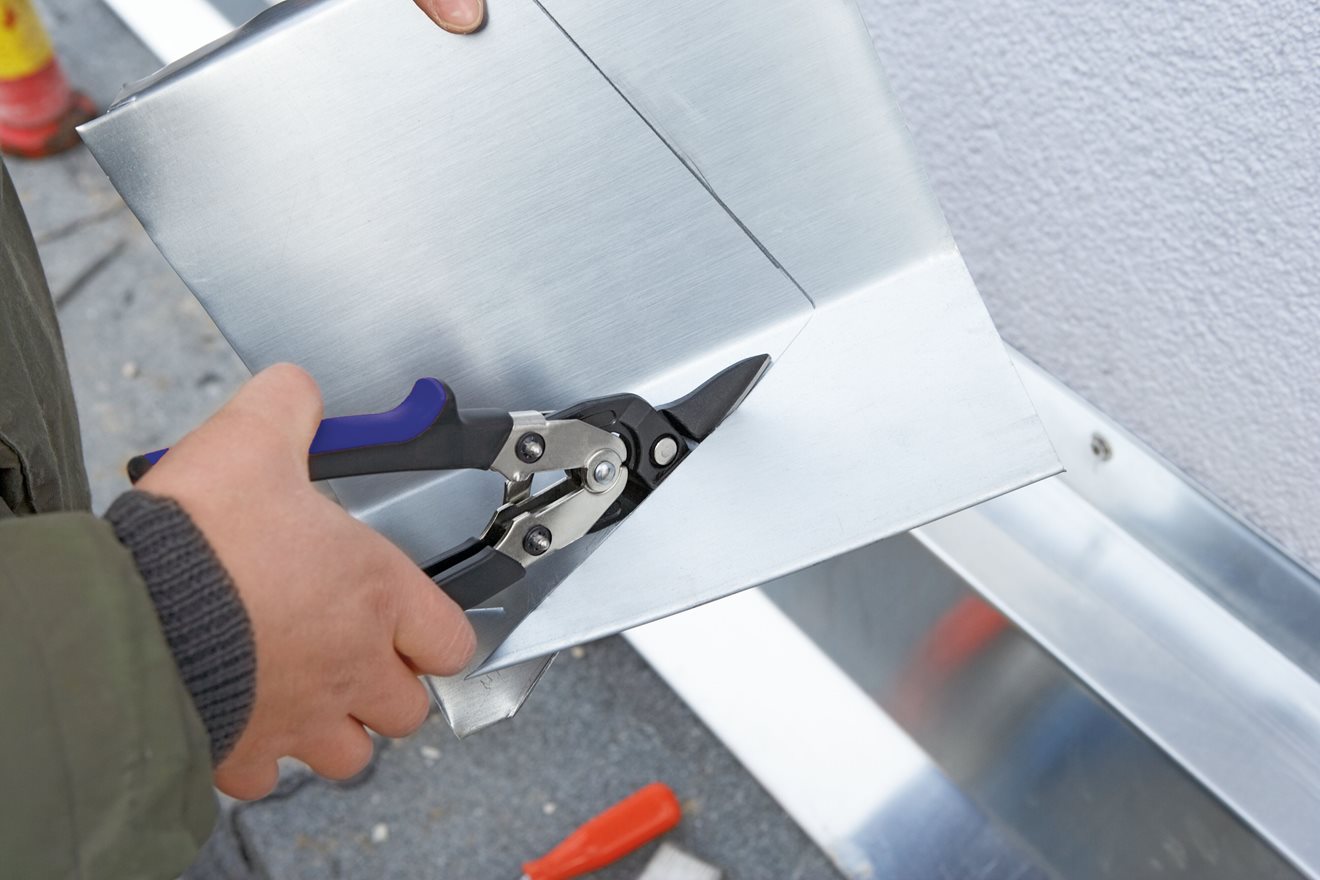


Lorsqu'il s'agit d'obtenir des résultats précis au millimètre près et des bords de coupe nets, vous pouvez compter sur BESSEY. Nos outils de coupe offrent des performances élevées pour un effort minimal, ce qui les rend idéaux pour les professionnels de la construction métallique, la plomberie ou les travaux de précision à domicile. Ils sont pensés dans les moindres détails, conçus pour durer et parfaitement adaptés à vos besoins. Vous travaillez ainsi de manière plus efficace, plus sûre et avec des outils professionnels qui tiennent leurs promesses.
Autres gammes de produits dans le domaine de la technologie de coupe
Ce que les utilisateurs disent de nos produits

« J'apprécie les cisailles à tôle manuelles de BESSEY. Depuis ma formation, je ne souhaite plus utiliser d'autres outils pour la découpe. Elles sont précises et particulièrement ergonomiques. »
M. Mitsch, plombier à l'adresse

Outil utile pour la technique de coupe
Questions fréquentes sur la technologie de découpe
Sur les cisailles à tôle classiques , la lame et le manche sont traditionnellement forgés d'un seul tenant. La force de coupe résulte du rapport entre la longueur de la lame et celle du manche.

Les cisailles à tôle manuelles à démultiplication sont composées d'une tête de cisaillement et d'une poignée. Ces deux éléments sont articulés l'un par rapport à l'autre, ce qui permet d'obtenir une démultiplication supplémentaire.

Cisailles Idealscheren
Ces cisailles portent bien leur nom. En effet, les cisailles Idealscheren sont de véritables « multitalents ». Elles vous permettent de découper à travers une tôle (découpe en continu) ainsi que de découper des contours ou des rayons de toutes tailles (découpe de formes). Peu importe que vous effectuiez vos travaux de découpe sur le bord de la tôle (découpe de rognage) ou au milieu de la plaque. Bien entendu, les cisailles Idealscheren vous permettent également d'effectuer de simples travaux d'évidement.
Cisailles de découpe
Les cisailles de découpe de formes sont particulièrement adaptées lorsque vous souhaitez réaliser des découpes fines à rayons serrés sur les bords de la tôle. Grâce à la forme filigrane de leurs lames, ces cisailles vous permettent de découper sans effort des formes ou des courbes extrêmement serrées.
Cisailles à passage
Vous souhaitez sectionner une tôle au centre et/ou au niveau des bords ? Dans ce cas, les cisailles à passage continu sont l'outil qu'il vous faut. Grâce aux longues lames de ces outils, vous pouvez rapidement, sans grand effort et avec précision, couper à longueur et découper même des tôles de grand format.

Avec le rachat en 1979 de la société Diener Werkzeugfabrik GmbH, riche d’une longue tradition, BESSEY a élargi de manière ciblée sa gamme de produits au domaine de la technique de découpe. La marque Erdi, déjà réputée à l’époque pour ses cisailles à tôle de haute qualité, a été intégrée à l’entreprise et a continué d’exister en tant que marque de produits indépendante sous l’égide de BESSEY. Le nom BESSEY Erdi désigne aujourd’hui de nombreux outils de coupe qui allient la force d’innovation et les normes de qualité de BESSEY à l’expertise et à la tradition de longue date des cisailles Erdi. Les utilisateurs bénéficient ainsi d’une promesse de qualité claire et d’une identité de marque cohérente au sein de la gamme BESSEY.
Les ciseaux pour droitiers sont affûtés et conçus de manière à vous permettre de découper facilement des courbes vers la droite (c'est-à-dire un arc allant de gauche à droite). Pour les courbes allant de droite à gauche, il est préférable d'utiliser des ciseaux pour gauchers.
On croit souvent que les ciseaux droits sont destinés aux droitiers et les ciseaux gauches aux gauchers. Ce n'est pas vrai. Au contraire. Si, en tant que droitier, vous découpez un rayon avec des ciseaux droits (voir ci-dessous, de gauche à droite), vous effectuez un mouvement de votre poignet vers l'extérieur. Avec des ciseaux gauches (rayon alors de droite à gauche), vous effectuez un mouvement de votre poignet vers l'intérieur. Ce qui est nettement plus ergonomique.
Ce n'est pas seulement la qualité des ciseaux qui influe sur le résultat. Il importe également de bien utiliser l'outil :
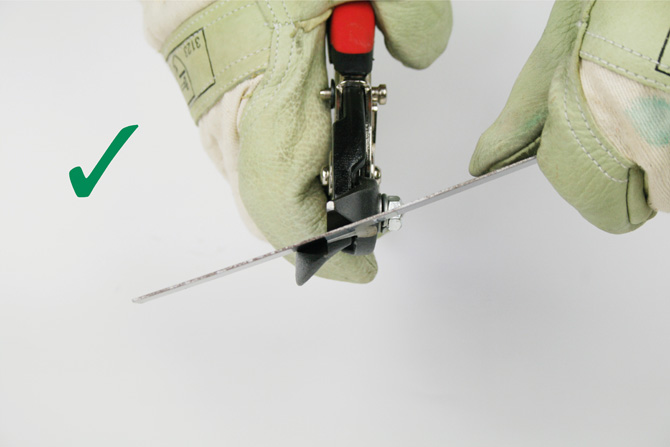
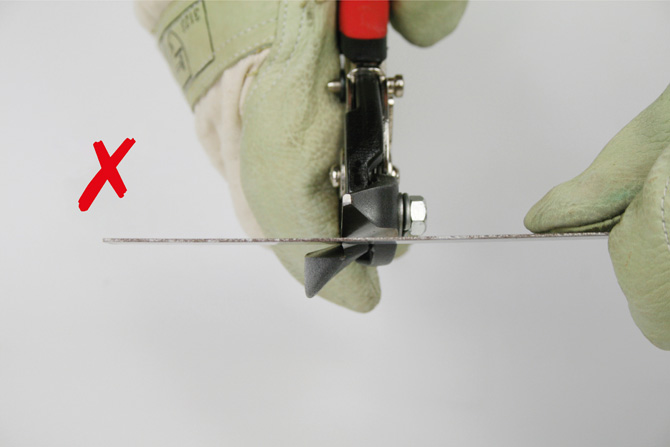
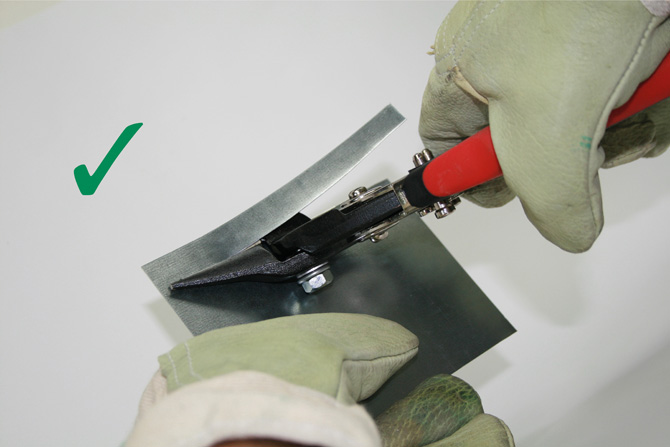
La tôle doit être posée sur la mâchoire de coupe. C'est la seule façon d'obtenir une coupe optimale grâce aux rayons de coupe. Si elle n'est pas posée sur la mâchoire de coupe, elle se déforme. Il en résulte un effort accru et une durée de vie réduite.
Pour la découpe, ouvrez largement la cisaille et enfoncez la tôle aussi loin que possible dans la mâchoire . La cisaille ne doit pas être complètement fermée pendant la découpe: ouvrez-la après environ les trois quarts de la longueur de coupe, puis refermez-la. C'est la seule façon d'obtenir une coupe sans bavures. Si vous fermez complètement la cisaille, de petites fissures transversales apparaissent à l'extrémité de la coupe à chaque découpe.
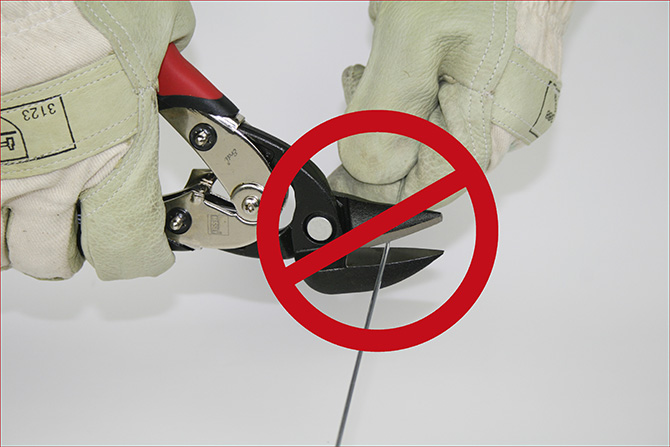
Il est également important de noter que les cisailles à tôle manuelles ne doivent être utilisées que pour couper des tôles fines en métaux tendres et en acier . Elles ne sont pas adaptées à la coupe de formes métalliques rondes ou angulaires, comme le fil métallique, car cela entraînerait l'ébréchure des lames.
|
|
|
|
|
|
|
|
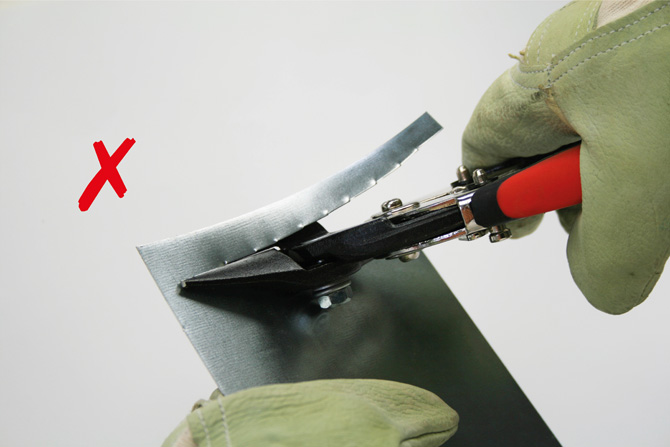
Si la force manuelle ne suffit pas pour découper la tôle, cela peut s'expliquer par deux raisons : soit les lames sont tout simplement émoussées, soit la tôle est peut-être trop épaisse. En effet, lors de l'utilisation d'une cisaille à tôle manuelle, il convient de veiller à ne découper que des tôles d'une épaisseur comprise entre 1,2 et 1,9 mm. Cela dépend toutefois toujours du type de tôle ainsi que de la qualité des lames.